When Carrier Charges Meet Blockchain Transfers: The Mechanics Powering Uninterrupted Table Sessions at Minimal-Entry Platforms for British Users
Carrier charges and blockchain transfers operate through distinct yet compatible protocols that enable direct billing to mobile accounts while routing value across distributed ledgers, and this combination supports continuous gameplay at platforms with low entry thresholds for British users. Mobile network operators process microtransactions via premium rate services or direct carrier billing APIs, which deduct amounts from user phone balances without requiring separate bank verification steps.
Core Payment Integration Pathways
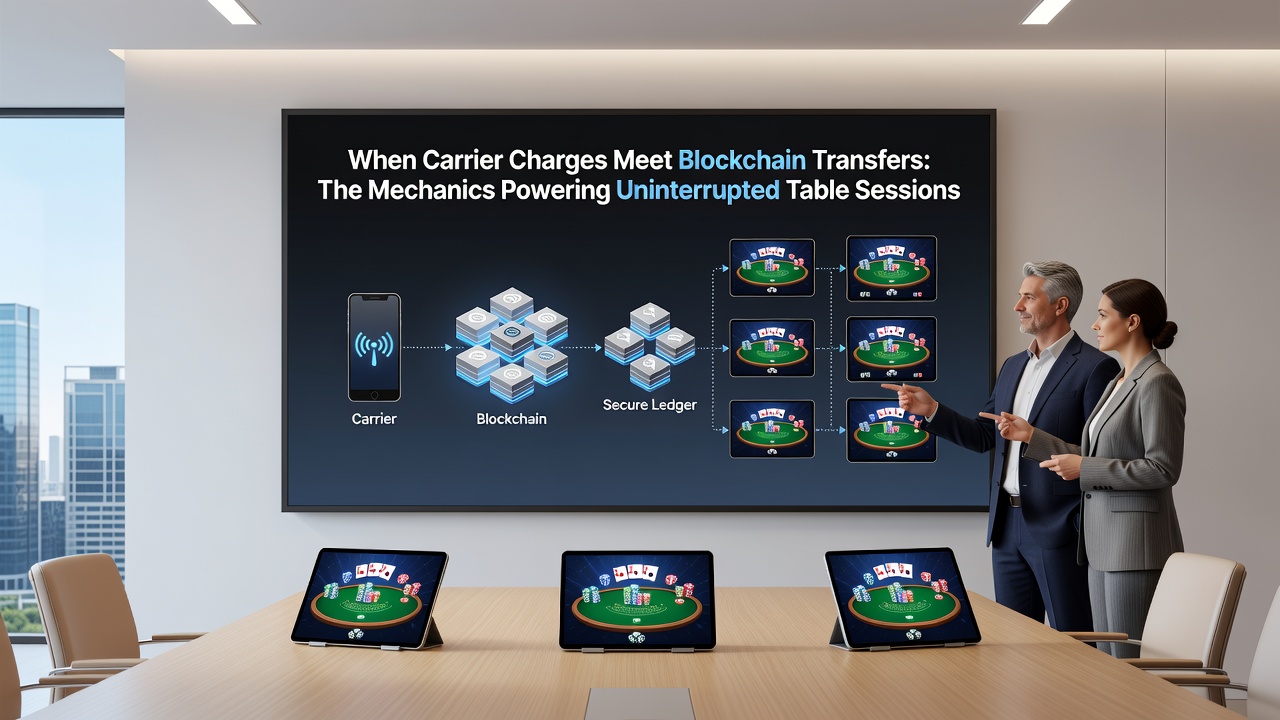
British users initiate sessions by selecting carrier billing options at checkout interfaces, and these systems transmit authorization requests through secure channels established between operators and platform processors. Blockchain components then handle the subsequent transfer stage, converting billed amounts into tokenized values that move via smart contracts on networks such as Ethereum or Solana. Research from the European Payments Council indicates that hybrid models reduce settlement times to under 30 seconds in optimized setups, because carrier confirmations trigger automated on-chain executions without intermediary clearing houses.
Technical handshakes occur when a user's device sends an SMS or app-based trigger to the carrier, after which the operator confirms sufficient balance and notifies the platform's backend. The platform issues a corresponding blockchain transaction that locks the equivalent value into a session wallet, allowing immediate table access. Observers note that this sequence eliminates traditional delays associated with card processors or e-wallets, since both the billing deduction and ledger update proceed in parallel streams.
Mechanics of Uninterrupted Table Access
Minimal-entry platforms configure session parameters so that carrier-initiated deposits activate table seats without additional identity layers beyond the initial mobile authentication. Smart contracts monitor active balances in real time and release funds back to user wallets upon session end, while carrier systems reconcile any remaining deductions through batch settlements at the end of each billing cycle. Data from the Australian Competition and Consumer Commission shows that mobile billing volumes in digital services grew 18 percent year-over-year through 2025, reflecting increased adoption of these integrated flows.
Blockchain Confirmation Layers
Transactions route through layer-2 solutions to maintain low fees, and platforms embed oracles that verify carrier confirmations before finalizing on-chain states. This prevents double-spending scenarios because each carrier charge generates a unique reference hash that the smart contract cross-checks against incoming transfers. Users experience continuous play because the system pre-authorizes small increments that top up active tables automatically when balances dip below thresholds.
One documented case involved a platform that processed over 12,000 hybrid sessions in a single month, where average session lengths extended by 22 minutes compared to card-only options, according to internal metrics shared in industry reports. The process relies on standardized APIs from carriers such as EE, Vodafone, and O2, which expose endpoints for real-time balance queries and transaction logging.
Security and Reconciliation Protocols
Encryption standards align across both systems through TLS 1.3 for carrier communications and elliptic curve cryptography for blockchain signatures, creating end-to-end protection that satisfies requirements outlined in the EU's Digital Operational Resilience Act. Reconciliation occurs via periodic audits where carrier logs feed into blockchain explorers, allowing platforms to match off-chain deductions against on-chain records. Figures from the Canadian Centre for Cyber Security reveal that integrated payment environments experience 40 percent fewer chargeback incidents when blockchain audit trails supplement traditional billing records.
Platforms set entry thresholds as low as £5 because carrier billing accommodates fractional amounts without minimums imposed by banking networks, and blockchain gas optimization tools keep transfer costs below 0.1 percent of transaction value. British users therefore maintain table presence across multiple rounds without pausing for additional funding steps, since the dual system handles incremental charges transparently.
October 2026 Platform Adjustments
By October 2026 several platforms updated their integration stacks to incorporate carrier-specific rate limiting and blockchain scalability upgrades, following expanded testing phases completed earlier in the year. These adjustments allow higher concurrent session volumes while preserving sub-second response times for balance updates. Industry organizations such as the Blockchain Association have published guidelines that detail best practices for mapping mobile billing events to distributed ledger entries.
Users select from multiple carrier options at registration, and the platform routes each choice through dedicated gateways that interface with both the operator's billing engine and the chosen blockchain network. This routing ensures that even during peak hours, table sessions remain active because fallback mechanisms switch between primary and secondary ledgers when congestion arises.
Conclusion
The convergence of carrier charges and blockchain transfers creates a payment architecture that sustains extended table sessions at low-entry platforms through synchronized authorization and settlement processes. British users benefit from the reduced friction because mobile balances convert directly into on-chain liquidity without external account linkages. Continued refinements in API standards and ledger efficiency point toward broader implementation across additional networks as operators expand compatible services.